What makes it phoenix aroma
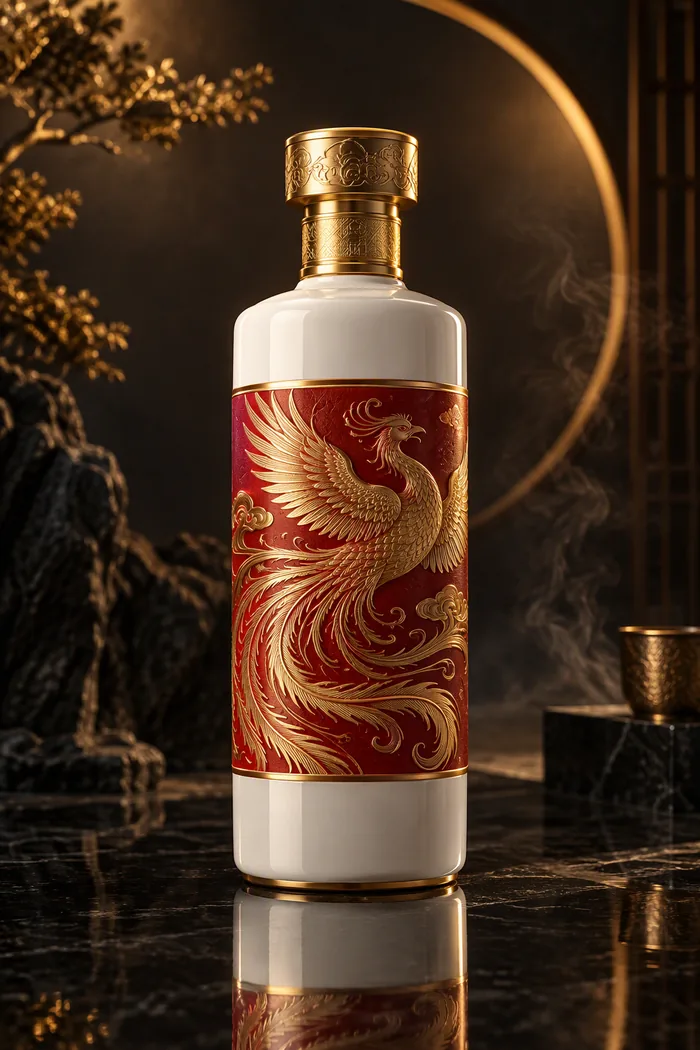
Phoenix aroma belongs to Shaanxi alone, and almost entirely to one house. It reads as a bridge between the two biggest styles: it has the clean grain and pear of light aroma, the honeyed fruit and body of strong aroma, and a faint smoky-sour edge that belongs to neither.
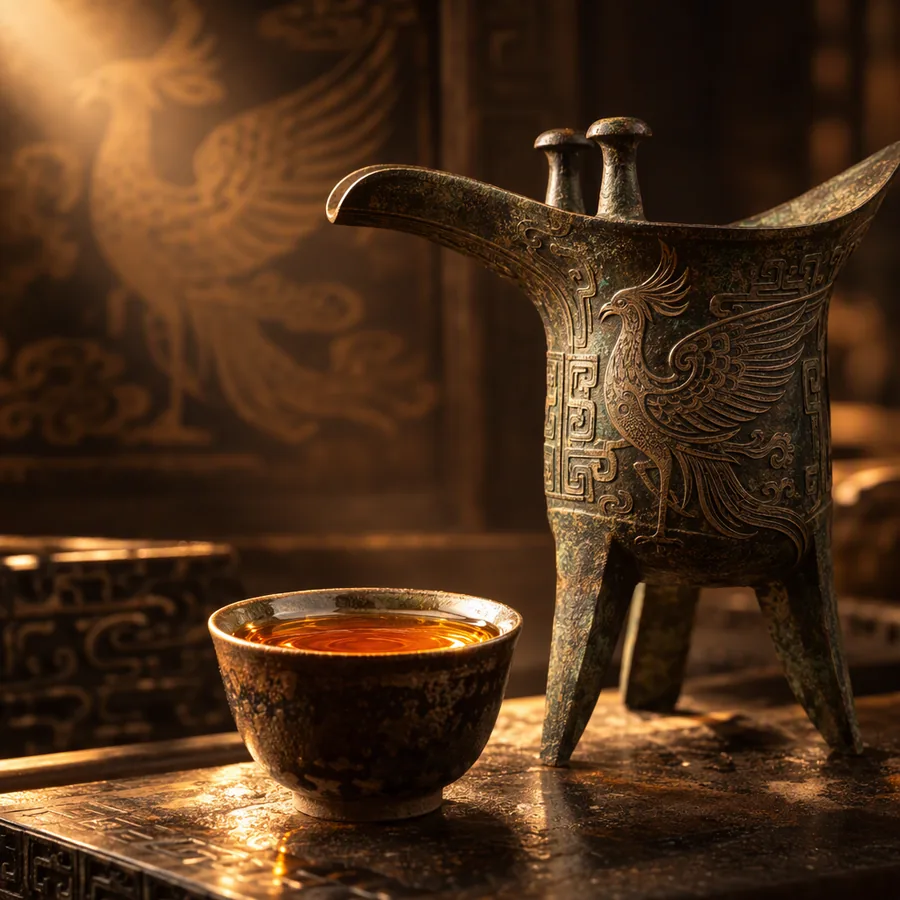
The distinguishing feature is not the fermentation but the storage. Instead of ceramic jars, the spirit rests in 酒海 — large vessels woven from willow or wicker and lined on the inside with a layer built up from paper, pig blood, egg white and beeswax. The lining is slightly permeable, so the spirit slowly oxidises and picks up colour and aroma from the vessel. A spirit aged this way turns faintly amber, which is unusual in baijiu and entirely expected here.
Fermentation uses earth cellars rather than the permanent mud pits of strong aroma. The cellar walls are rebuilt each year — 一年一清, one clearing a year — so the microbial community is renewed instead of accumulated. The result is less of the heavy cellar note and more grain clarity.
How it is made
Grain is fermented in an earth cellar that is dug, used, and then stripped and rebuilt for the next cycle. Because the walls are renewed, the cellar contributes freshness rather than the deep bacterial funk of an old mud pit. Fermentation is a continuous-mash process, closer to strong aroma in structure than to light aroma’s clean break.
The qu is a medium-temperature barley, wheat and pea starter, which sits between the low-temperature starter of light aroma and the hot wheat starter of sauce aroma. Both ethyl acetate and ethyl hexanoate end up in the glass, which is exactly why the style reads as a hybrid without being a blend.
Aging in the wicker vessel is the part no other style copies. The lining is built up in layers over months before the vessel is used, and the slow exchange through it softens the spirit and adds a resinous, faintly waxy note. Bottles aged this way for years develop a colour that would be a fault in any other style.
In the glass
Nose
Stewed apple and pear, cooked grain, a thread of resin and smoke, and a faint sour-milk edge that is the style’s signature. Less fruit-forward than strong aroma, less austere than light.
Palate
Medium body with a sweet-sour tension that is unusual in baijiu. The fruit arrives first, then a savoury grain middle, then a slight bitterness at the edges that keeps it from cloying.
Finish
Medium-long, drying, with a sour-savoury trace and a cooling resin note. The bitterness at the end is characteristic — if it is absent, suspect the bottle.
How to serve it
| Temperature | Room temperature, 18–22°C |
|---|---|
| Glass | Small tulip, 15–20 ml |
| Pour | Neat, no water |
| Pace | Slow, with strongly flavoured food |
| Food | Shaanxi noodles, lamb, cumin, vinegar-heavy dishes |
What people get wrong
- “Phoenix aroma is a blend of light and strong.”
- It has its own national product standard, GB/T 14867, its own cellar practice and its own aging vessel. Similarities in the glass come from shared chemistry, not from mixing two spirits.
- “The amber colour means it was flavoured.”
- Colour comes from years in the wicker vessel. It is expected in aged phoenix aroma and should be faint, not dark.
- “It is a niche curiosity.”
- It is a recognised national aroma type with a large domestic following. It is simply rarely exported, which is why it looks obscure outside China.