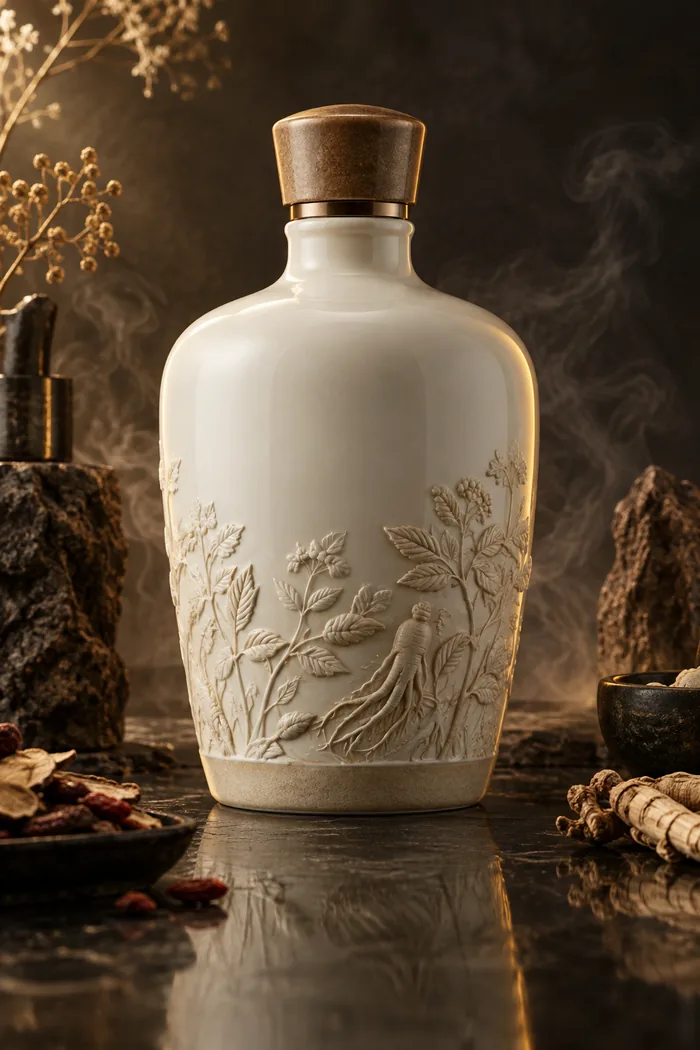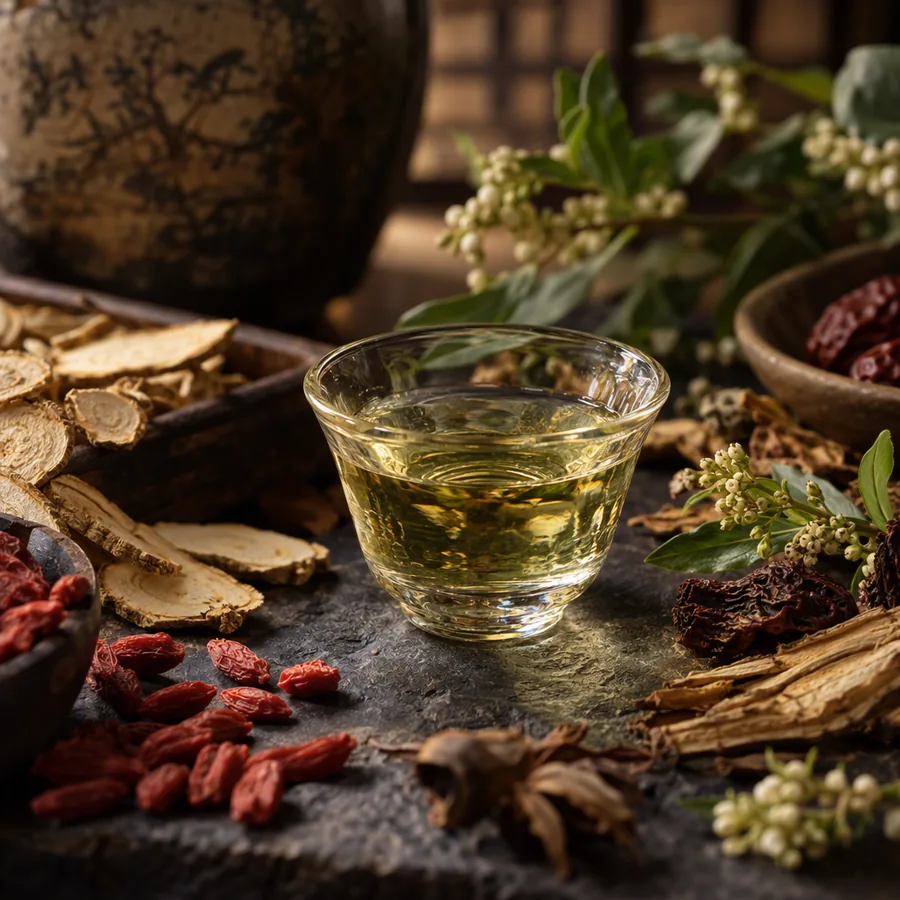
What makes it herbal aroma
Herbal aroma — also called 药香, medicine aroma — is effectively a style of one. It comes from a single distillery in Zunyi, Guizhou, and it is made with a starter that contains more than a hundred Chinese medicinal herbs. The result is not a flavoured spirit: the herbs are part of the fermentation, and their effect shows up as aroma compounds rather than as a herbal infusion.
The glass is dominated by camphor, menthol, bitter bark and dried citrus peel, over a base that is closer to sauce aroma than to anything else. There is sweetness underneath, but it arrives after the medicinal top notes, and the finish is bitter in a way that most drinkers read as either complex or unpleasant on first contact.
It is the clearest case in the category of a style that should be tasted before it is bought. Nothing in a written description prepares you for it, and no other bottle in a beginner’s collection will taste remotely similar.
How it is made
The house uses two starters at once. A large qu built on wheat and a small qu built on rice are both prepared with herbs added, then used at different stages — the small qu for saccharification, the large qu for the aromatic fermentation that follows. This dual-track approach is what separates the style from every other baijiu process.
Fermentation happens in a cellar whose walls are treated to stay alkaline, which suppresses the acid-producing bacteria that drive strong aroma and pushes the fermentation toward different products. Two separate mashes are then distilled together in a single pass, so the aromatic streams combine at the still rather than in the bottle.
The style has no national GB/T standard; it is made under a Guizhou provincial standard. That is not a quality signal either way — it reflects how few producers make it. If you see a herbal-aroma bottle from a house other than the original, treat the style name as a claim rather than a category.
In the glass
Nose
Camphor and menthol first, then bitter orange peel, dried herbs, a touch of incense, and underneath it a savoury fermented base. Nothing fruity. The intensity is high enough that the first sniff often reads as medicinal rather than as food.
Palate
Bitter entry, which is rare in baijiu. Herbal and resinous through the middle with a cooling sensation, then a slow sweetness that arrives late. Body is medium and the texture is slightly astringent.
Finish
Long and bitter-sweet, with the menthol cooling off last. The aftertaste lingers in a way that is either the reason to drink it or the reason not to.
How to serve it
| Temperature | Room temperature, 18–22°C |
|---|---|
| Glass | Small glass, 10–15 ml only |
| Pour | Neat; treat it like a bitter digestif |
| Pace | Small pours, after food rather than during |
| Food | Strongly flavoured food; dark chocolate works |
What people get wrong
- “It is a health drink.”
- It is a distilled spirit at 46–54% ABV. Herbs in the starter shape the aroma; they do not make it medicinal, and no health claim should be read into the style name.
- “Herbal aroma is a herb-infused baijiu.”
- Nothing is steeped after distillation. The herbs go into the qu and into the fermentation, so the aromatics are produced biologically rather than extracted.
- “It is a good bottle to start with.”
- Almost certainly not. Its bitterness and camphor note are unlike anything else in the category, and most drinkers need a reference point first.