What makes it mixed aroma
Mixed aroma is not one recipe but a family of them. The Chinese term 兼香 means “holding both aromas”, and it covers spirits that carry the characters of two or more of the main styles. The most common pairing is strong and sauce: a sweet, fruity opening that turns savoury and roasted in the middle.
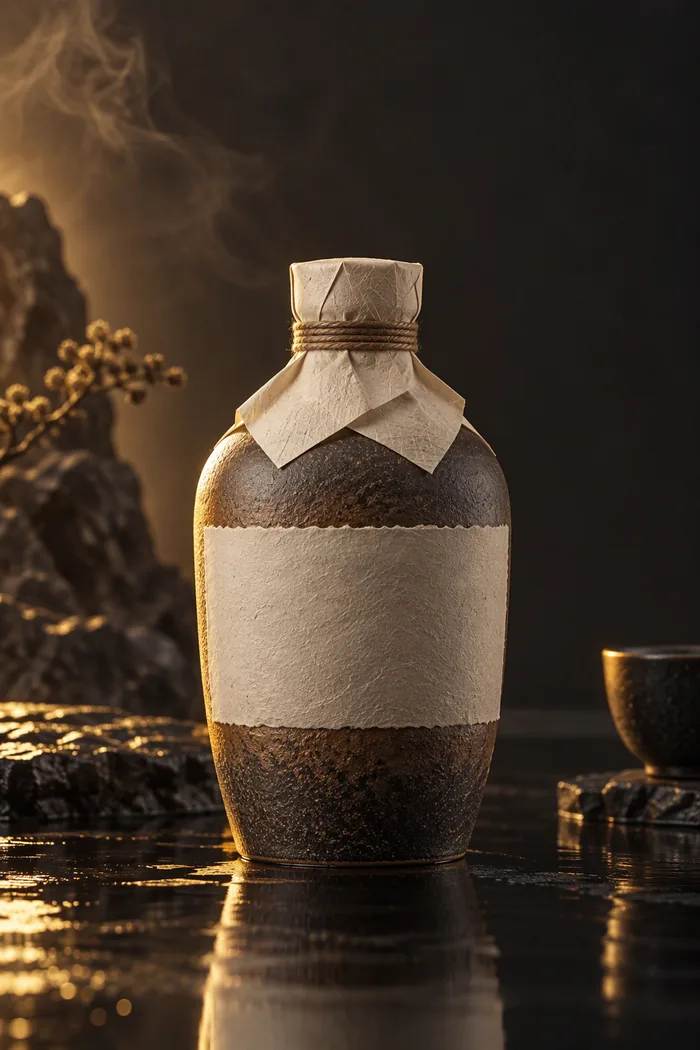
The bottle in this database is a specific and well-documented case. Jiugui, from Xiangxi in Hunan, is registered under GB/T 10781.11 as 馥郁香 — fuyu, “rich and layered” aroma. Its process runs a small-qu saccharification first and a large-qu fermentation second, in a mud pit, so light, strong and sauce characters all appear in the same spirit. The house describes the result as 前浓、中清、后酱: strong at the front, light in the middle, sauce at the back.
That sequence is the useful way to taste any mixed-aroma bottle. Instead of asking “what does this remind me of”, follow the glass from entry to finish and see where the character changes. If it does not change, the bottle is probably a blend rather than a true mixed-aroma fermentation.
How it is made
The process is best understood as two fermentations in sequence rather than one. A small qu, made on rice, starts the saccharification and gives the clean, light-aroma opening. A large qu then drives the aromatic fermentation in a mud pit, which is where the strong-aroma fruit and the sauce-aroma savoury notes come from.
Because the two stages run in the same vessel, the characters are layered in the liquid rather than mixed in a tank. That is the technical difference between a mixed-aroma spirit and a blend of two finished baijius, and it is why the style can be identified by how it changes across the palate.
Aging and blending then decide how obvious the layers are. Young bottles show the seams; well-blended ones move from fruit to savoury without a visible step, which is the house style at its best.
In the glass
Nose
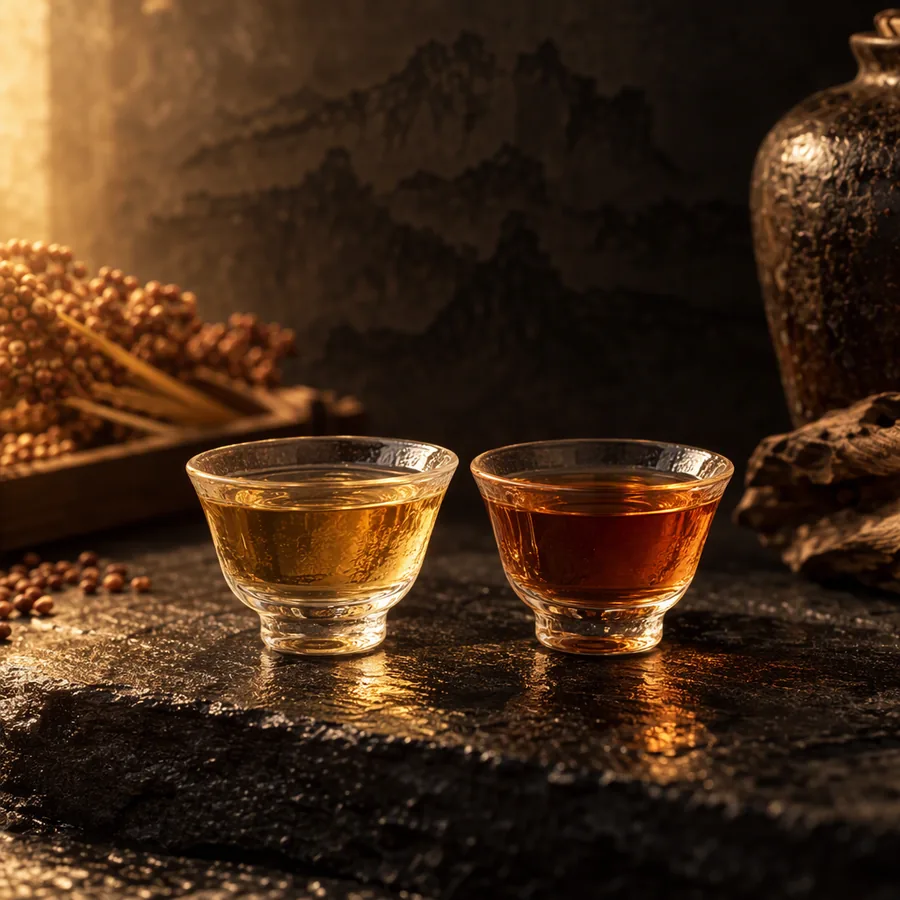
Starts fruity and honeyed, close to strong aroma, then a savoury roasted note and a little smoke come up behind it. Dried citrus and cooked grain in the background.
Palate
Sweet and round on entry, then the middle turns drier and more savoury as the sauce-aroma component takes over. The transition is the point of the style — a good bottle makes it feel like a single continuous arc.
Finish
Long, with the savoury note outlasting the fruit and a cooling sweetness at the very end. More complex than strong aroma, less blunt than sauce aroma.
How to serve it
| Temperature | Room temperature, 18–22°C |
|---|---|
| Glass | Small tulip, 15–20 ml |
| Pour | Neat; let it sit 3–5 minutes to open |
| Pace | Slow, paying attention to the mid-palate shift |
| Food | Hunan and Sichuan cooking, braised pork, smoked meat |
What people get wrong
- “Mixed aroma is two baijius blended together.”
- In a true mixed-aroma spirit the characters come from sequential fermentations in one vessel. Blending two finished spirits is a different, cheaper operation and is not the same product.
- “兼香 and 馥郁香 are the same.”
- 兼香 is the umbrella. Fuyu is a specific registered style with its own standard, GB/T 10781.11, and a defined three-stage profile.
- “If it changes across the palate, it is inconsistent.”
- The change is deliberate and is the identifying feature. Judging it by the standards of a single-aroma style will misread it.