What makes it light aroma
Light aroma is what baijiu tastes like before the category gets complicated. The profile is built on ethyl acetate — the compound that gives pear drops and green apple — with none of the cellar or roasted notes of the other major styles. The body is light, the finish is dry, and the whole thing is legible on the first sip.
The style is also the oldest documented. The Fen River valley in Shanxi has been making it since at least the Northern Qi dynasty in the 6th century, and the technique spread from there across northern China. Beijing’s erguotou is a descendant of the same tradition, adapted for cheap, high-strength everyday drinking.
Two families share the label and they are not interchangeable. Daqu light aroma, the Fenjiu line, ferments with a low-temperature barley-and-pea starter for nearly a month and can be aged for years. Bran-qu light aroma, which covers most Beijing erguotou, uses a faster cultured starter and is bottled young at high strength. Same aroma family, different drinks.
How it is made
The governing idea is cleanliness. Fermentation happens in ceramic jars buried in the ground, but the mash never touches soil — the jar is the boundary. Grain is steamed before fermentation and the equipment is cleaned between rounds, in a process called 清蒸清烧, steam clean and distil clean. Nothing is carried over from the previous batch.
Sorghum is cooked, inoculated, and fermented for roughly 28 days. The spirit is distilled, and the spent grain gets a second fermentation and a second distillation before being discarded — 清蒸二次清, twice steamed, twice cleared. That second draw is not filler; in good hands it carries much of the floral top note.
Because the process is short and the vessels are inert, the style shows its raw material directly. Grain quality and water matter more here than in any other style, and there is nowhere for a fault to hide. That is also why it is unforgiving to make badly: a bad light aroma is simply thin.
In the glass
Nose
Pear and green apple from the ethyl acetate, then steamed sorghum, a faint lilac or acacia floral note, and a clean mineral edge. No cellar, no smoke, no roasted character.
Palate
Light-bodied and slightly sweet on entry, with the fruit turning toward cooked grain. Low viscosity, noticeable but soft alcohol at higher strengths, and a texture that stays clean rather than coating.
Finish
Dry and medium-short, with a cooling trace of pear that fades quickly. The shortness is the point — it is what makes the style drinkable across a long meal and what makes it a good first bottle.
How to serve it
| Temperature | Room temperature, or lightly chilled to 12–15°C |
|---|---|
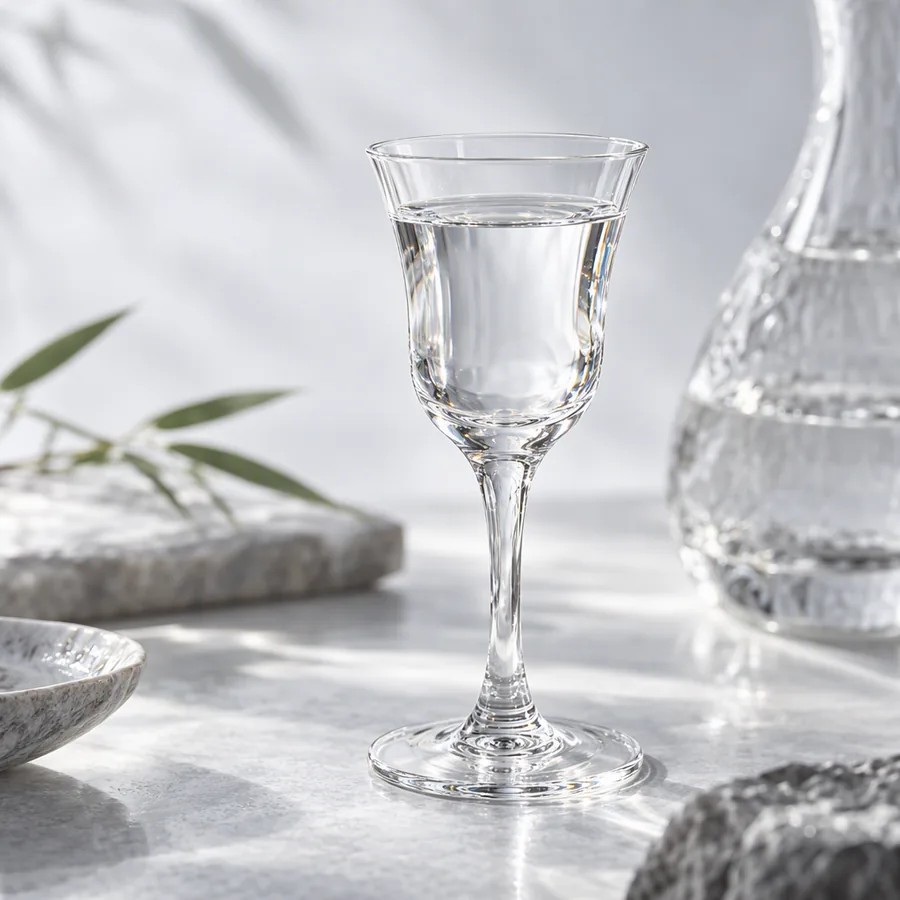
| Glass | Small tulip or a clean shot glass |
| Pour | Neat; the only style that tolerates a chill well |
| Pace | Aperitif pace, before or alongside lighter food |
| Food | Cold dishes, steamed fish, dumplings, noodles |
What people get wrong
- “Light aroma means low alcohol.”
- Fenjiu’s standard bottling is 53%. Beijing erguotou routinely reaches 56%. Light describes the aroma, not the strength.
- “Light means flavourless.”
- It means clean. The style has less going on than sauce aroma, but a good bottle has clear grain, fruit and minerality. If it tastes of nothing, that is a fault, not the style.
- “Erguotou and Fenjiu are the same thing.”
- They share an aroma family but not a production method. Daqu light aroma is fermented slowly and often aged; bran-qu erguotou is fast, young and built for high-strength everyday drinking.